Where it started: a stranger's garden
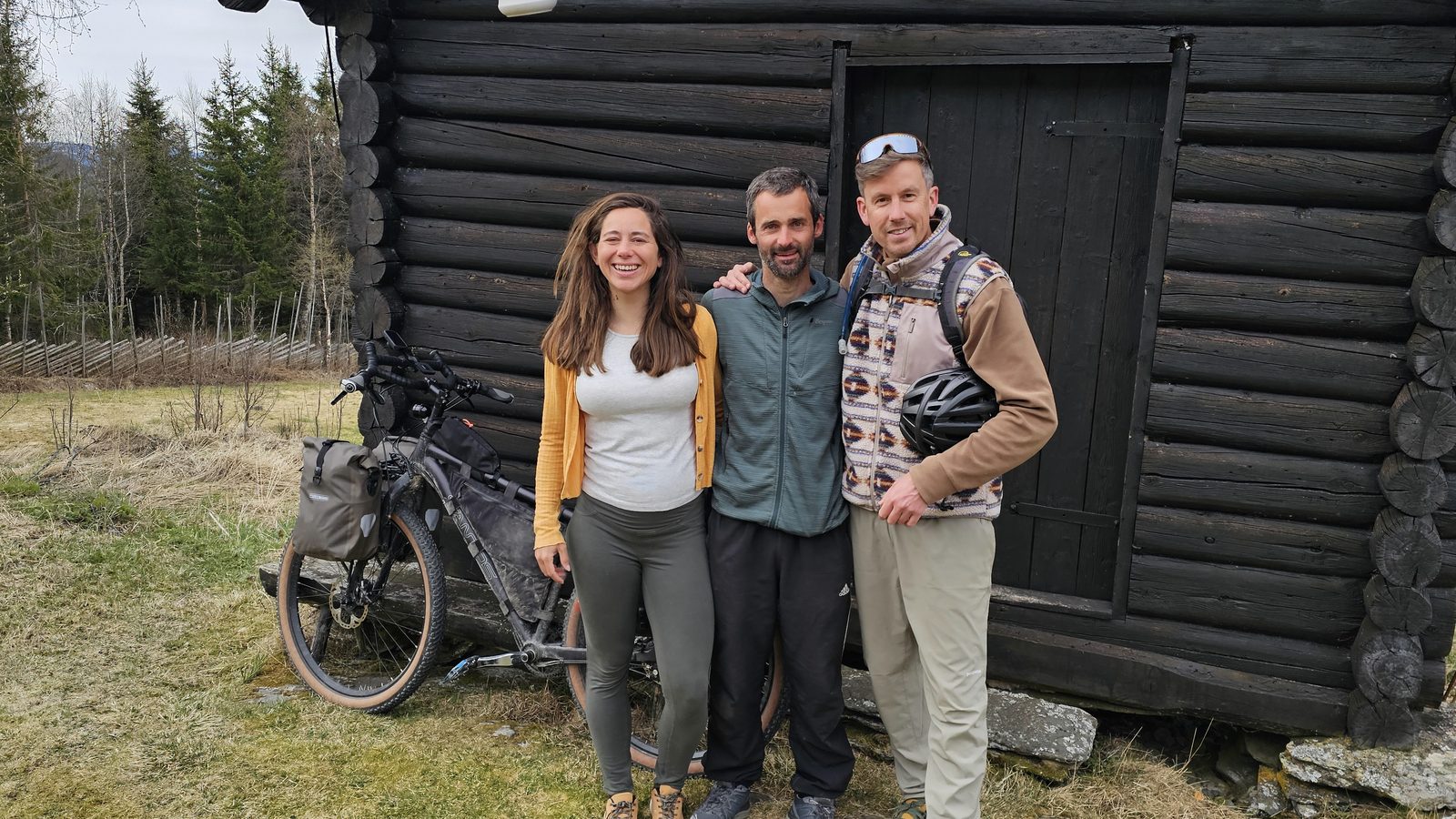
Day one in Norway I slept in a stranger's garden and it felt like home. The wooden house above Lillehammer belongs to Zoë and Olivier, a house I'd only ever seen on Instagram. Their friends Rick and Inge, both in their sixties, welcomed me that first evening; we ate together and later they slept outside in their own tent at minus six while I took the pilgrim's hut. After dinner Inge put out a recycled jar of homemade raspberry jam, hand-labelled in felt-tip, exactly the kind my parents set out back home. A thousand kilometres away, I felt completely at home.
Zoë and Olivier got back late that night from the hardware store, their car loaded with wood and were around all the next day. We worked in the garden together and sat down over the map; two experienced outdoor locals pointing me the right way. It mattered more than it sounds: half the gravel roads I'd hoped to ride were still closed under May snow and Olivier helped me trace a route that was both passable and stunning. A perfect day before heading north.
The highest road
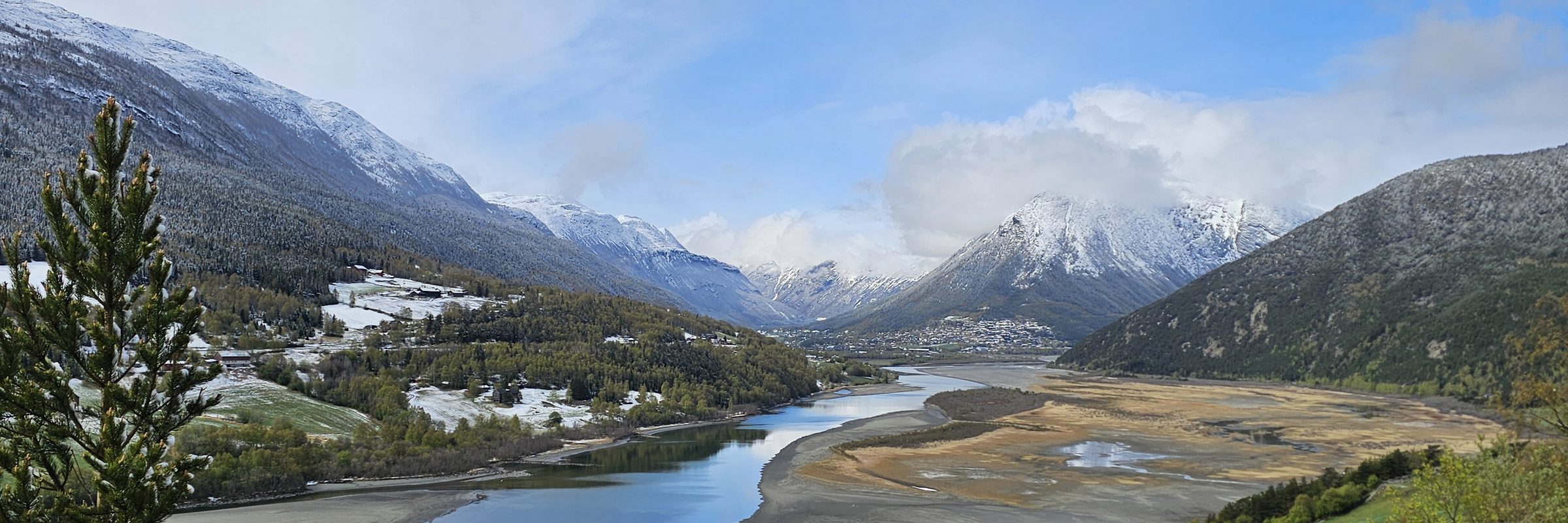
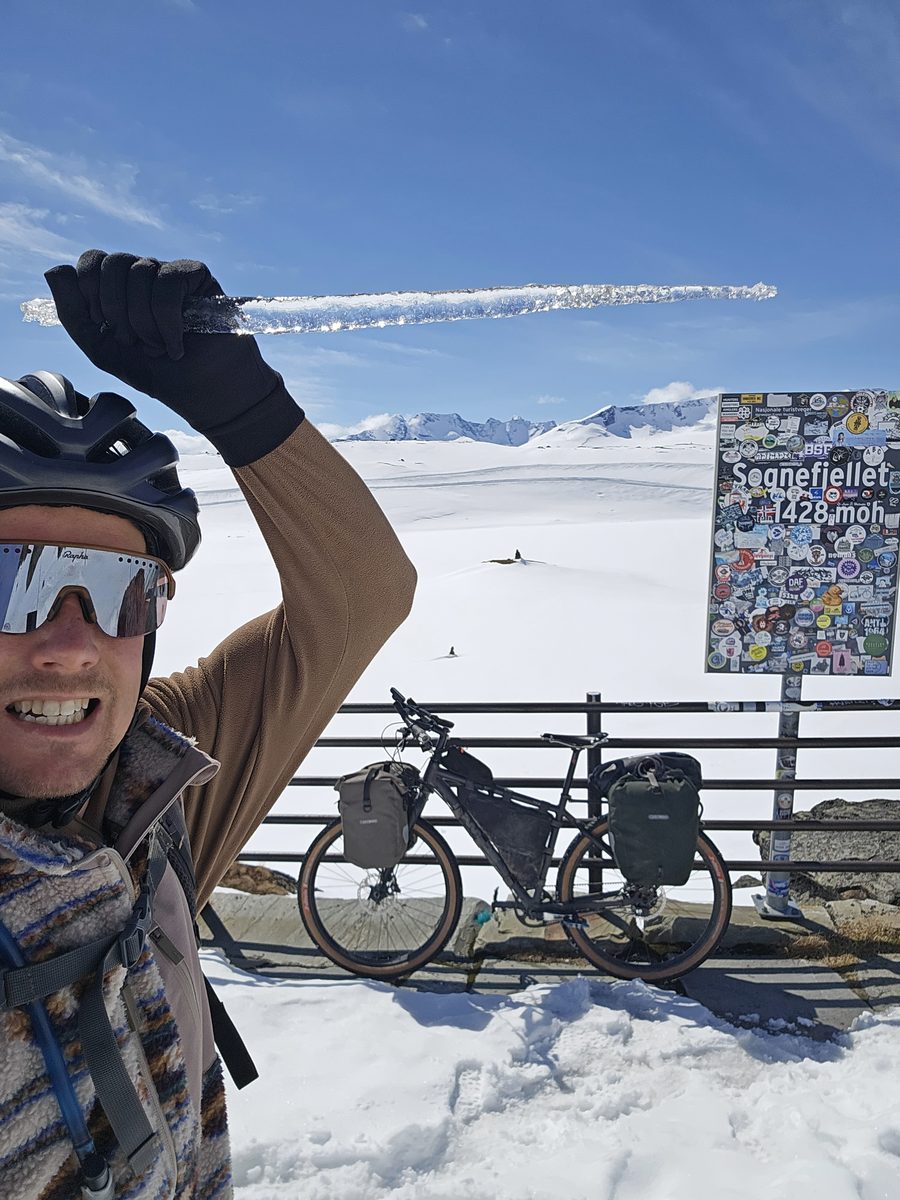
I don't think I've ever felt so alive on the bike as climbing Sognefjellet: the highest mountain pass road in Northern Europe, up to around 1,400 metres. The high peaks surfaced slowly as I rode, each viewpoint an excuse to catch my breath. A full day of sun and around zero degrees with thin traffic and the odd campervan. Reaching the top felt like a victory and of course I had to take the photo with the sign!
A week of rain and one Guinness
Then the weather closed in. After the better part of a week of rain and coffee brewed from river water, I rolled into Trondheim and found a camping spot on a hill overlooking the whole city. A flat patch of the greenest grass and no other soul around. That evening, at an Irish pub, a Guinness cost me 17.75 euros (!) But after two weeks of rain and river-water coffee, it tasted like a warm bath...
What a Guinness costs after two weeks of rain →Lofoten, without a filter
The ferry spat me out in Moskenes into cold, grey, raw air; Lofoten correcting me for having dressed for summer. The mountains here rise from the ocean like shark teeth and between them sit the most picturesque villages imaginable. I woke early, packed only coffee and breakfast, left the tent standing and rode straight for Reinebringen before the sun disappeared.
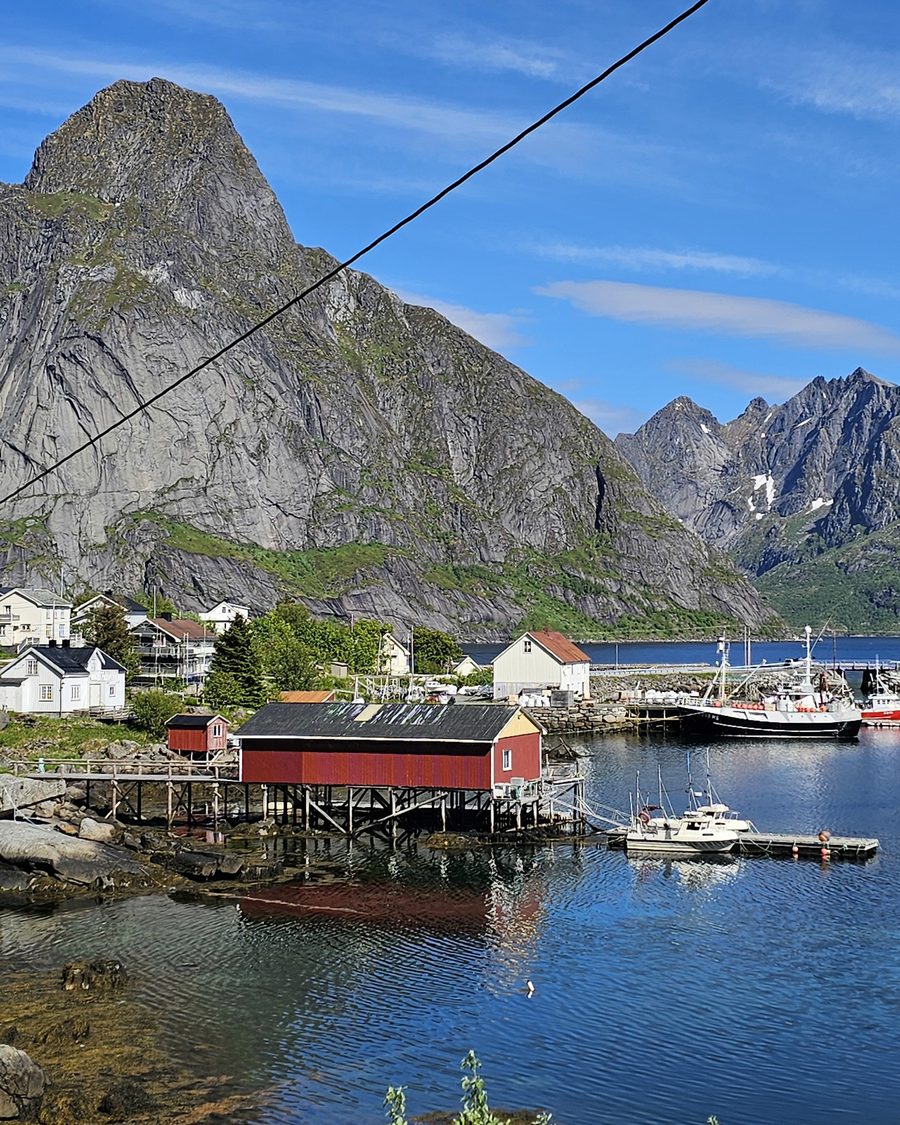
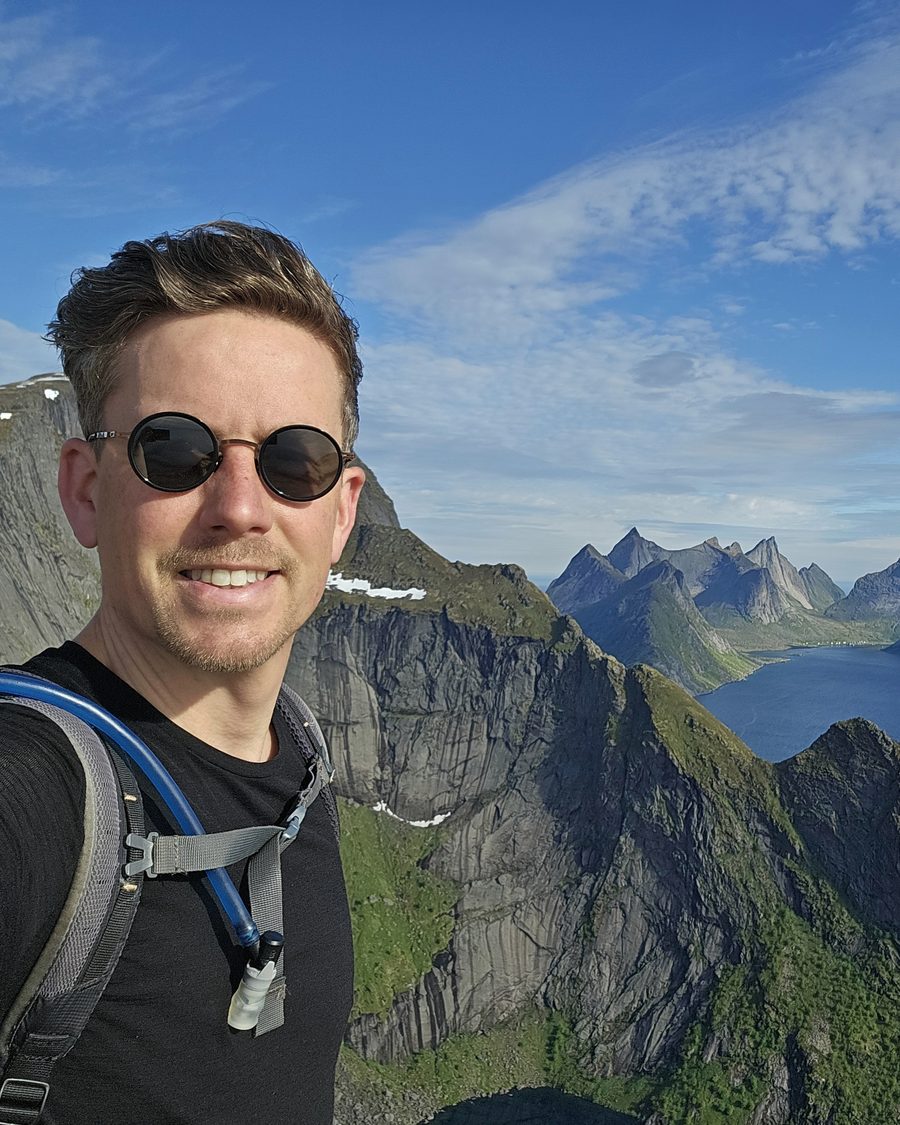
Reine from the road; and from the top of Reinebringen, eight in the morning.
Senja and the high North
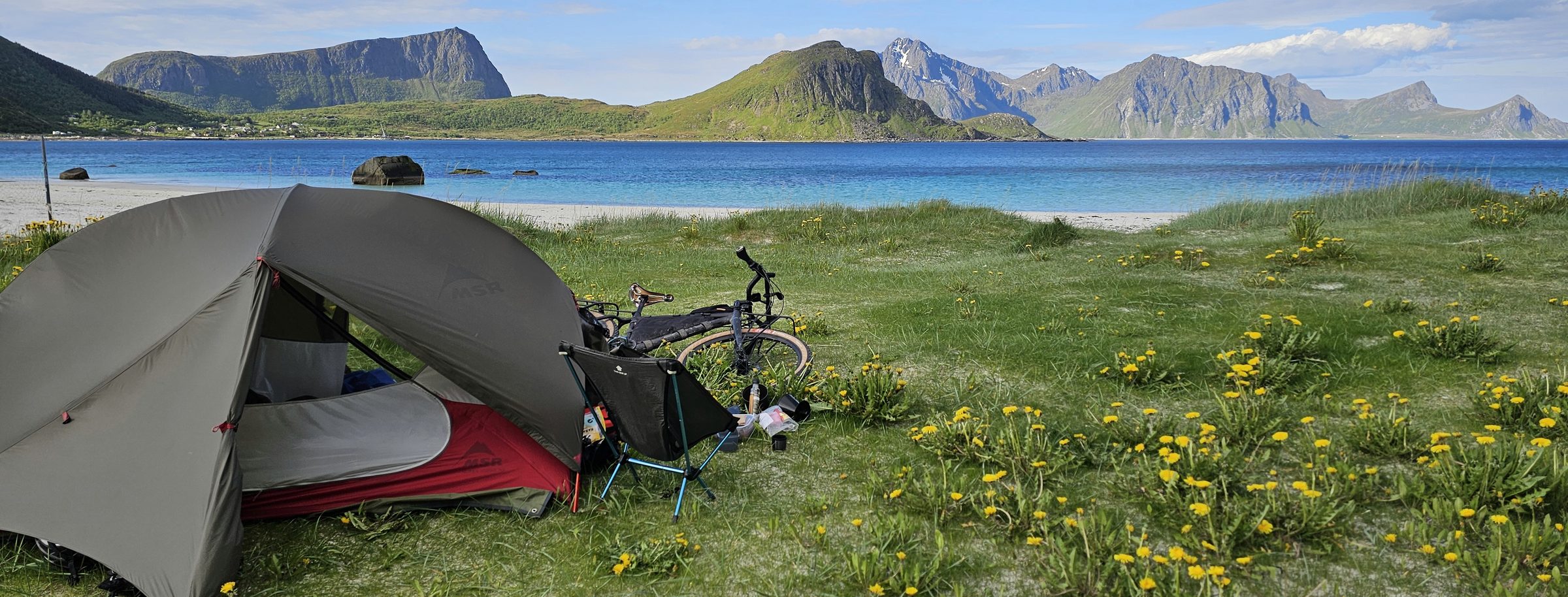
On Senja the road ran empty through the middle of the day; the real climb, up Hesten, waits for midnight. I spent a night in a gamme, a traditional turf hut on a storm-battered coast. Outside, a gale; inside the turf walls, not a breath of wind. I woke to dead calm and made coffee in the sun with the fjord doing its thing. Not a bad address!
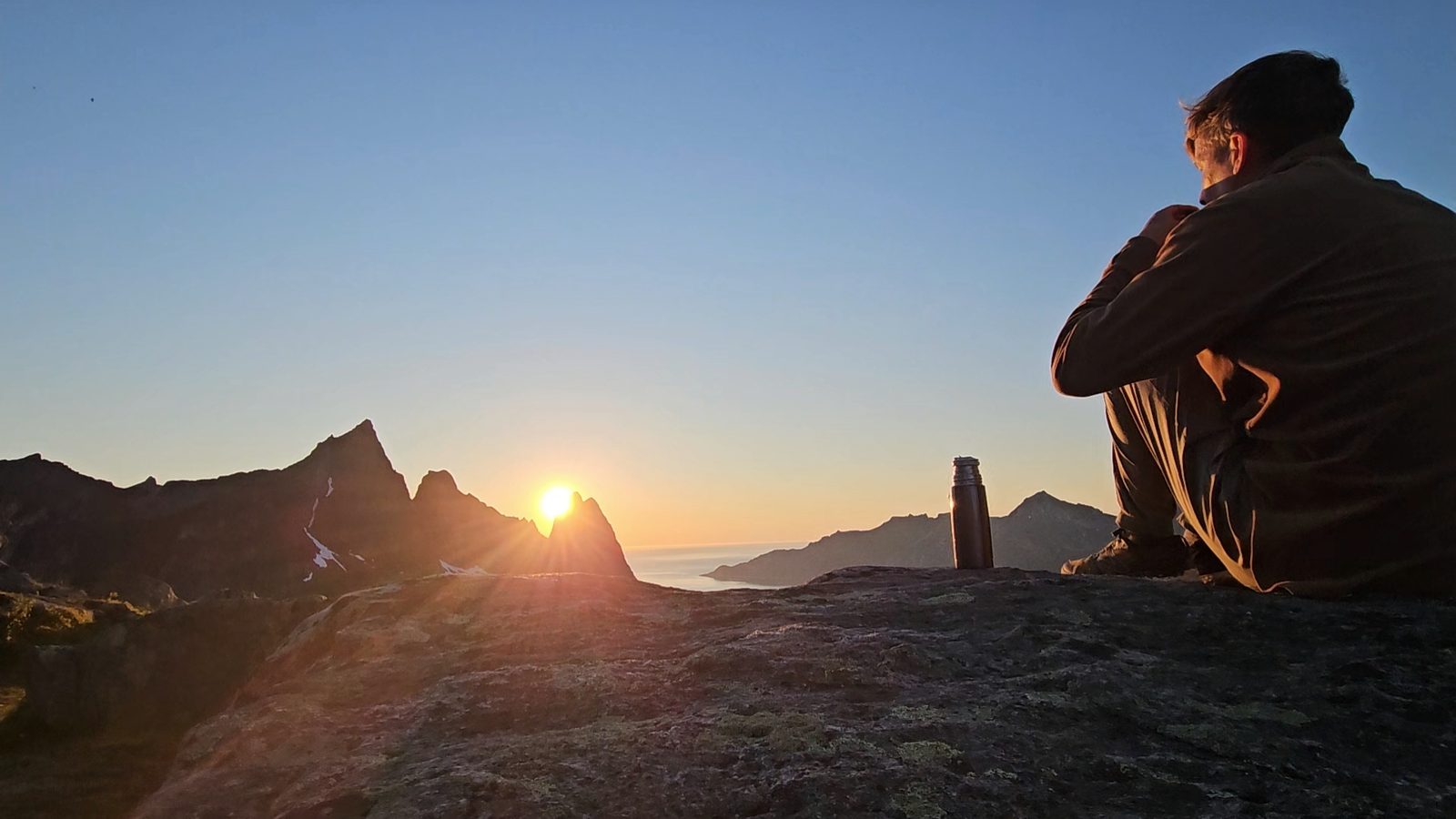
The Old Post Road
South of Alta the asphalt simply ended in a parking lot and the gravel began rolling into Lapland. Bæskades has connected coast and inland since the Stone Age; in 1798 a royal decree made it the winter postal route between Copenhagen and Alta, the mail carried over the plateau by reindeer sled. One line from the info board stayed with me: two horsemen died up here in a snowstorm, in July. I read all of that while being bitten five times, because the post road belongs to the insects during the summer.
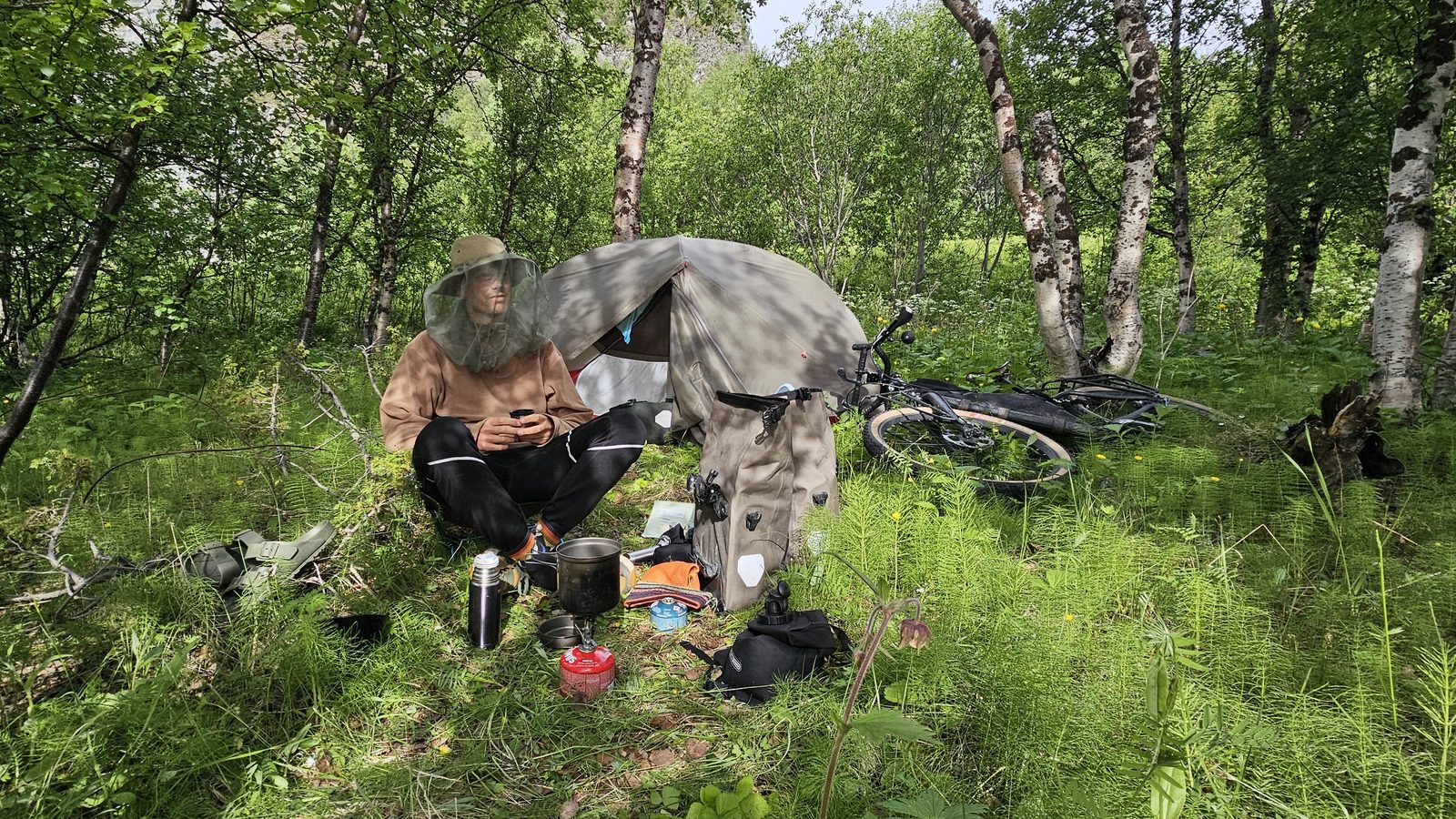
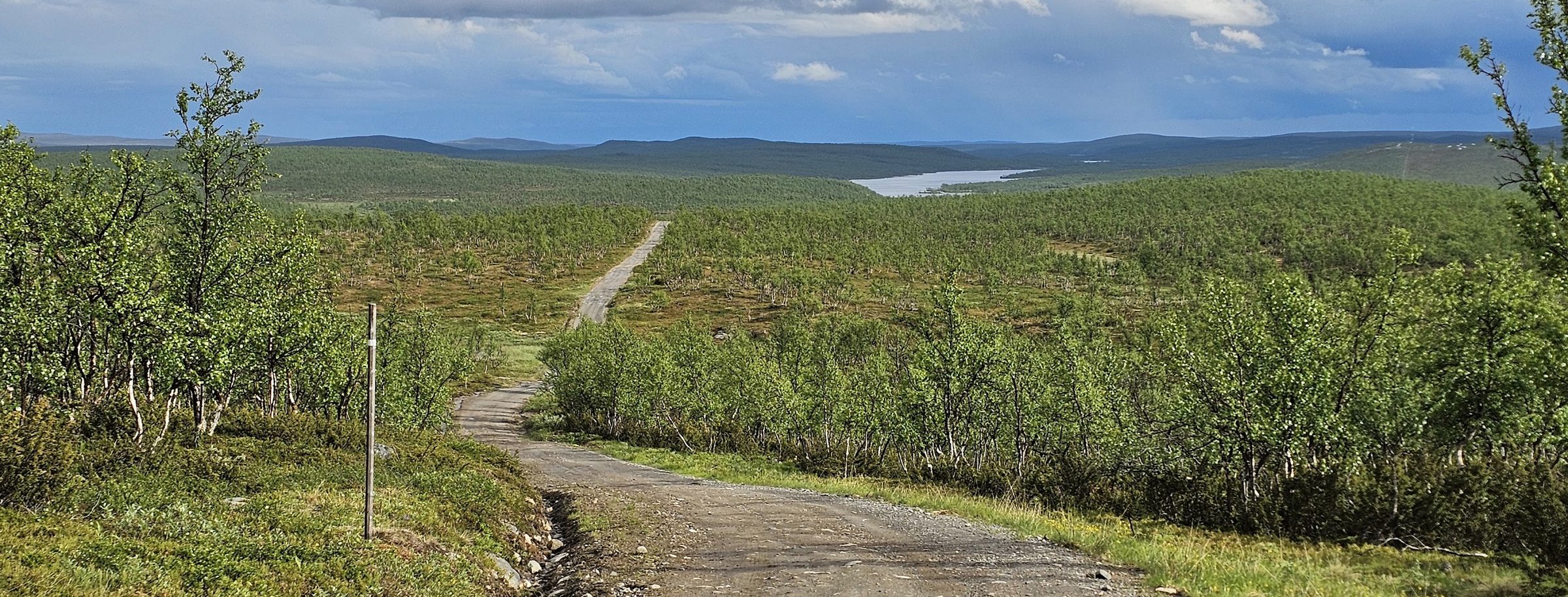
The road was gorgeous in that remote way, kilometres of it over the hills with nothing else in sight. If it weren't raining all the time! The gravel had turned into mud, a swollen creek soaked my socks for good and hungry became hangry; cold hands too cramped to pinch open a bag of nuts. When Stuoroaivi appeared, a lean-to in the middle of the tundra, I lit the Thermacell, the bugs vanished and I pitched the tent inside the shelter. Two days out there I met only one person: a Sami woman with two kids on a quad.
Kökar
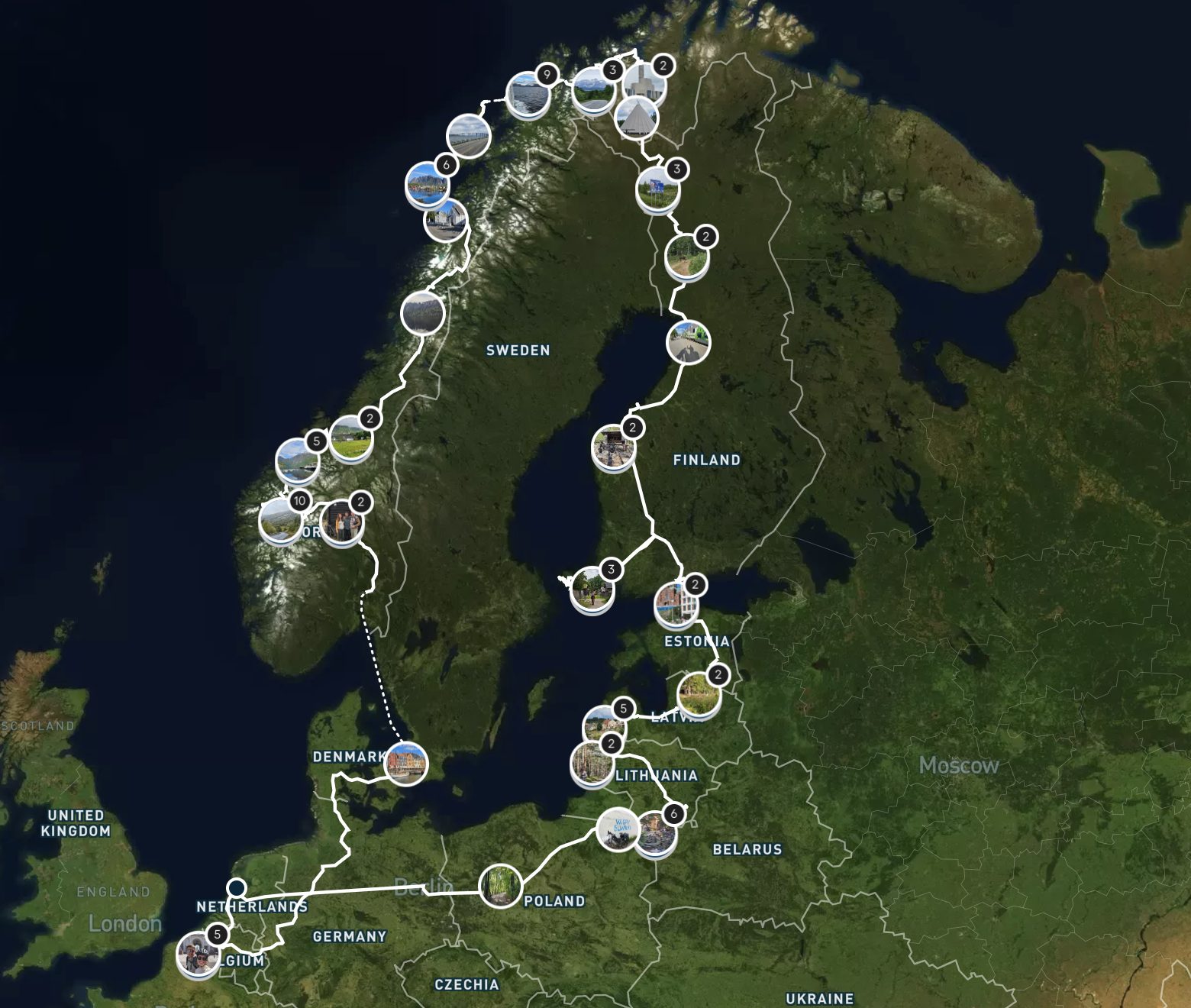
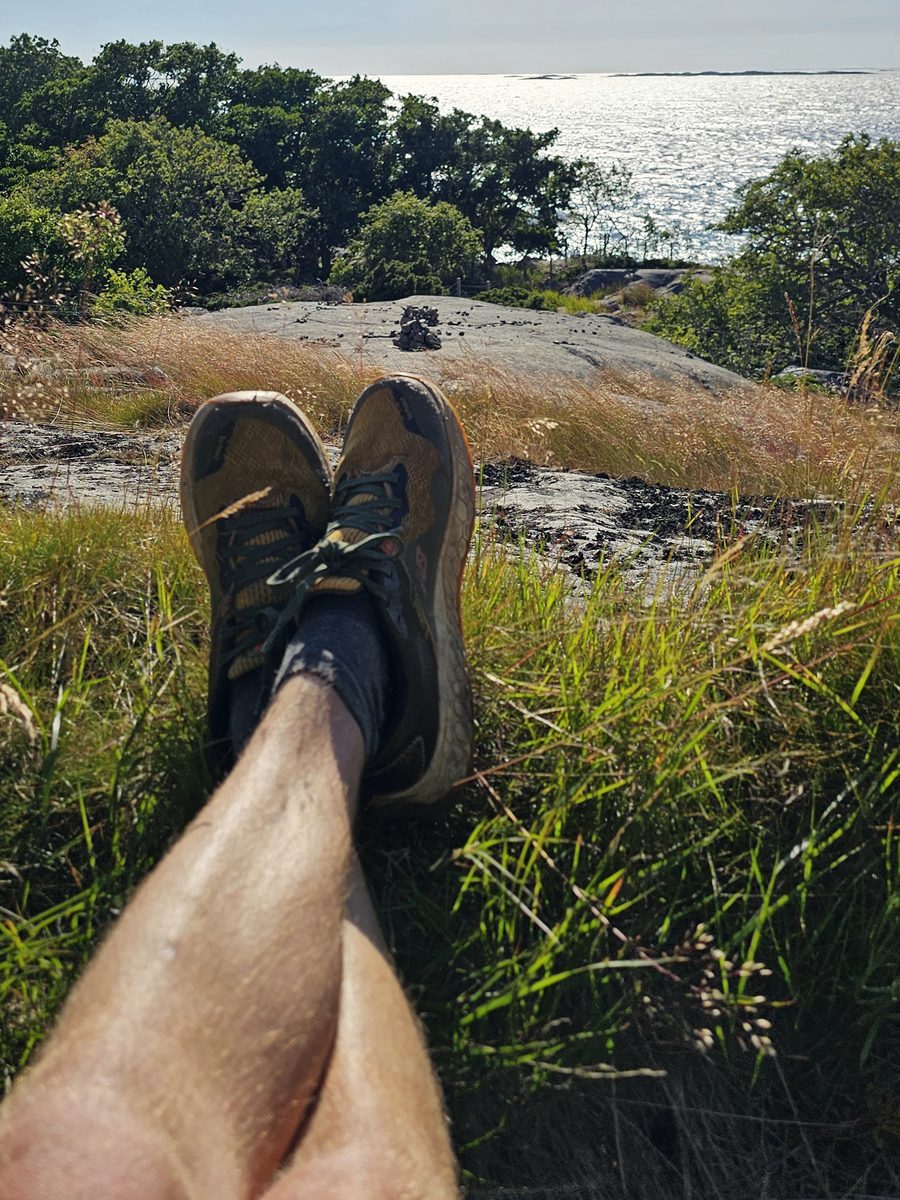
By the time I reached Kökar, out in the Åland archipelago, the wild cycling had softened into something slower. A Franciscan monastery ruin sits on Hamnö, on a rise above the bare skerries and the sea; the best place I found on the whole trip to simply sit and do nothing. Rock, water, stillness. A turning point before the long way back.
The Baltics, by train and bike, with Aga
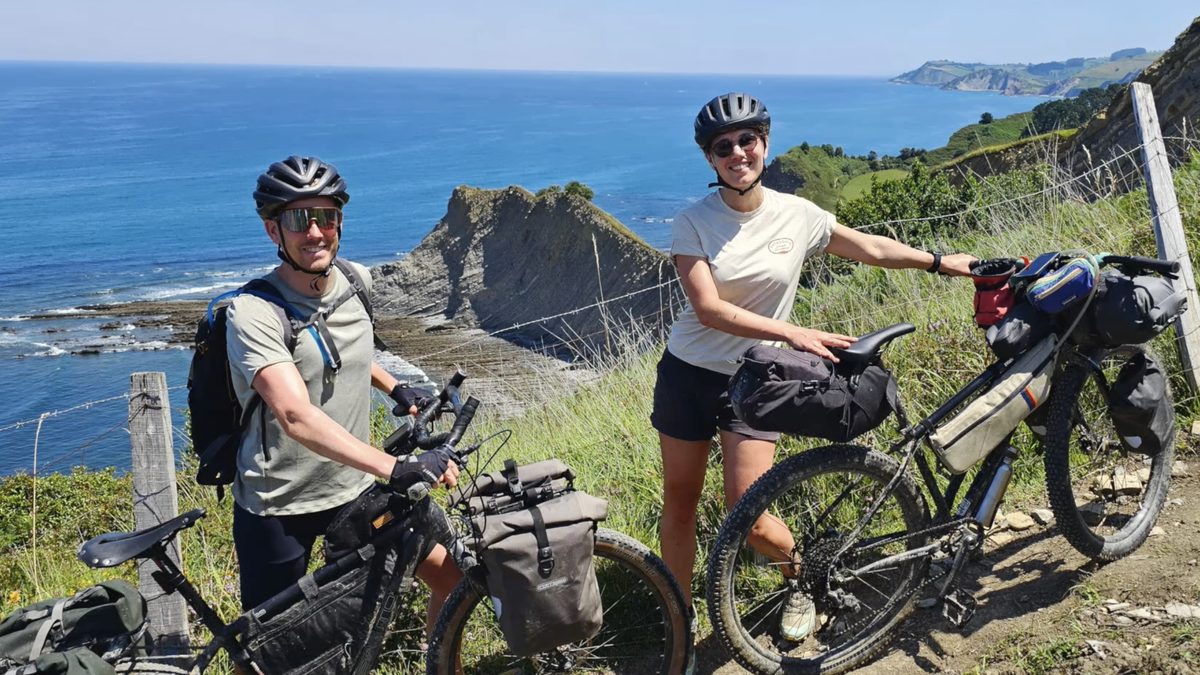
From Helsinki I wasn't alone anymore; Aga joined and we crossed to Tallinn and worked our way south by train and bike through Estonia, Latvia and Lithuania to Poland. Trains that carry your bike, forests full of chanterelles, a rye sourdough from a baker at a village market in Sabile so good we still talk about it. A different rhythm from the solo north and exactly the one the end of a long trip asks for.
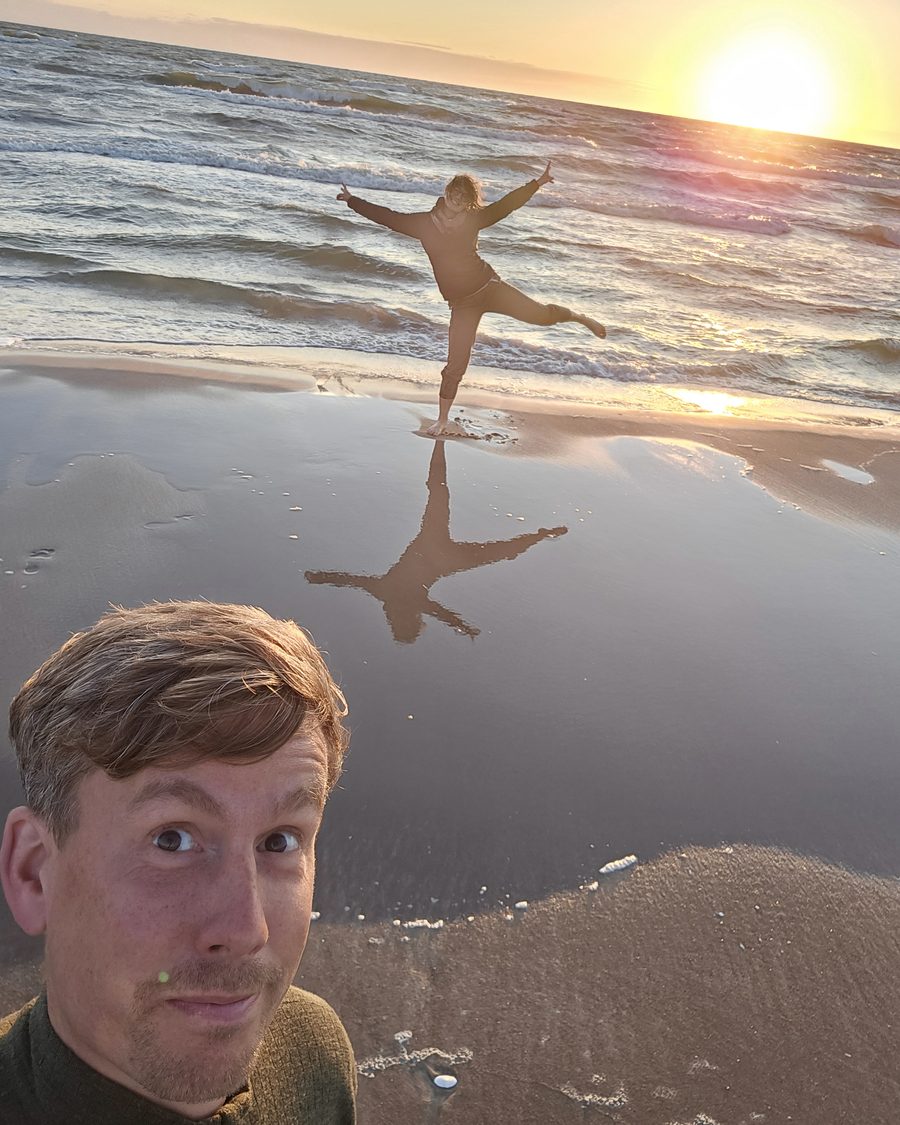
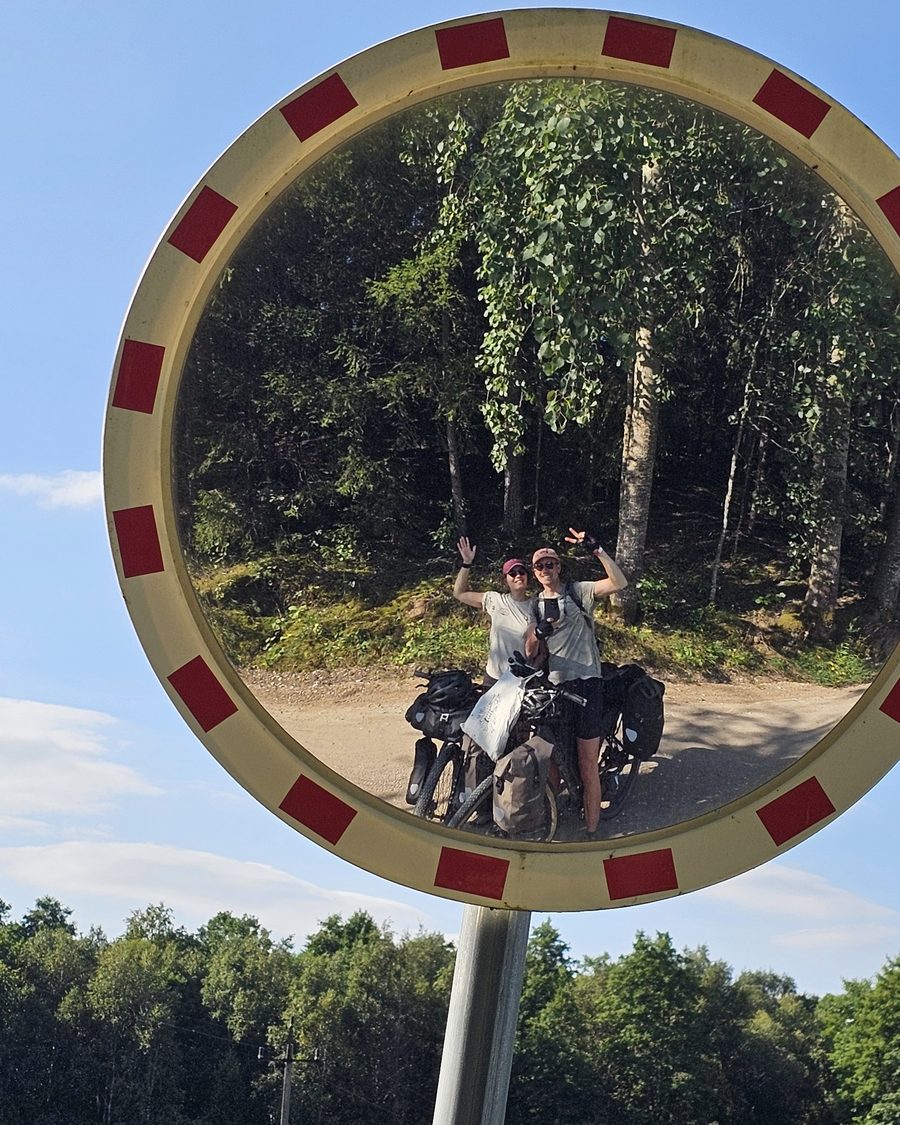
A different rhythm: Aga on the beach; the two of us somewhere on the way south.